PiAcademy / Scale: A design system, then AI — scaling the platform in Phase 2.
A design system, then AI — scaling the platform in Phase 2.
- Category
- Design System · AI Product Design
- Industry
- EdTech · UK exam preparation
- Design scope
- Design System · AI UX · UI
- Year
- 2025–2026
- Timeline
Design system: 2025
Phase 2: February – May 2026
- Team
- Founder, PM, 3 Developers, Tutors
- Platforms
- Website · Student Practice · Tutor Platform · Admin
An EdTech platform helping parents prepare children for 7+ to 11+, GCSEs, SATs, and competitive UK school entrance exams.
Design by Koshal Sharma as the sole product designer during employment, in collaboration with the in-house team. Presented as Artmaa’s founder experience, not an Artmaa agency commission.
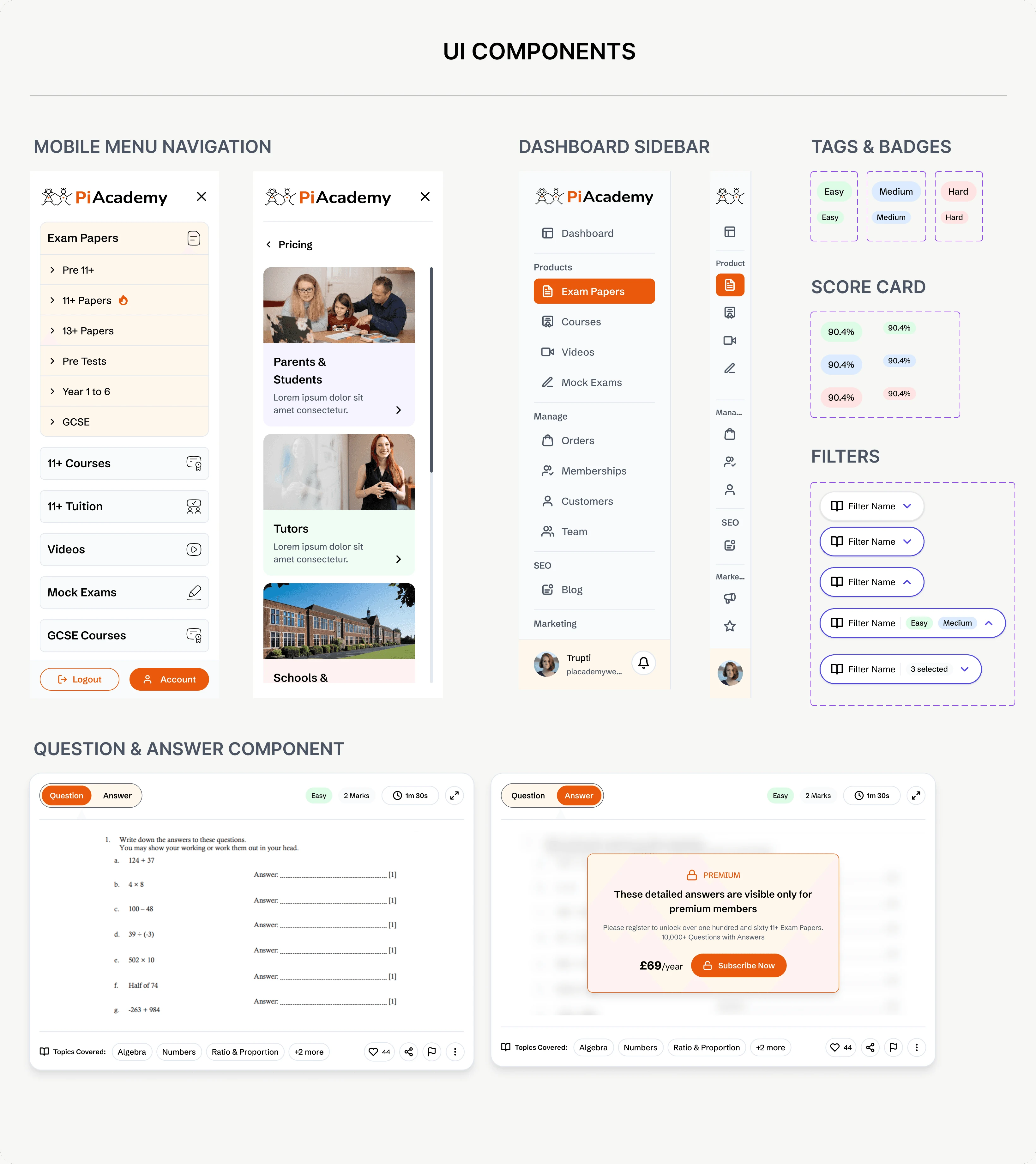
01 — Design system
A shared foundation, built from scratch.
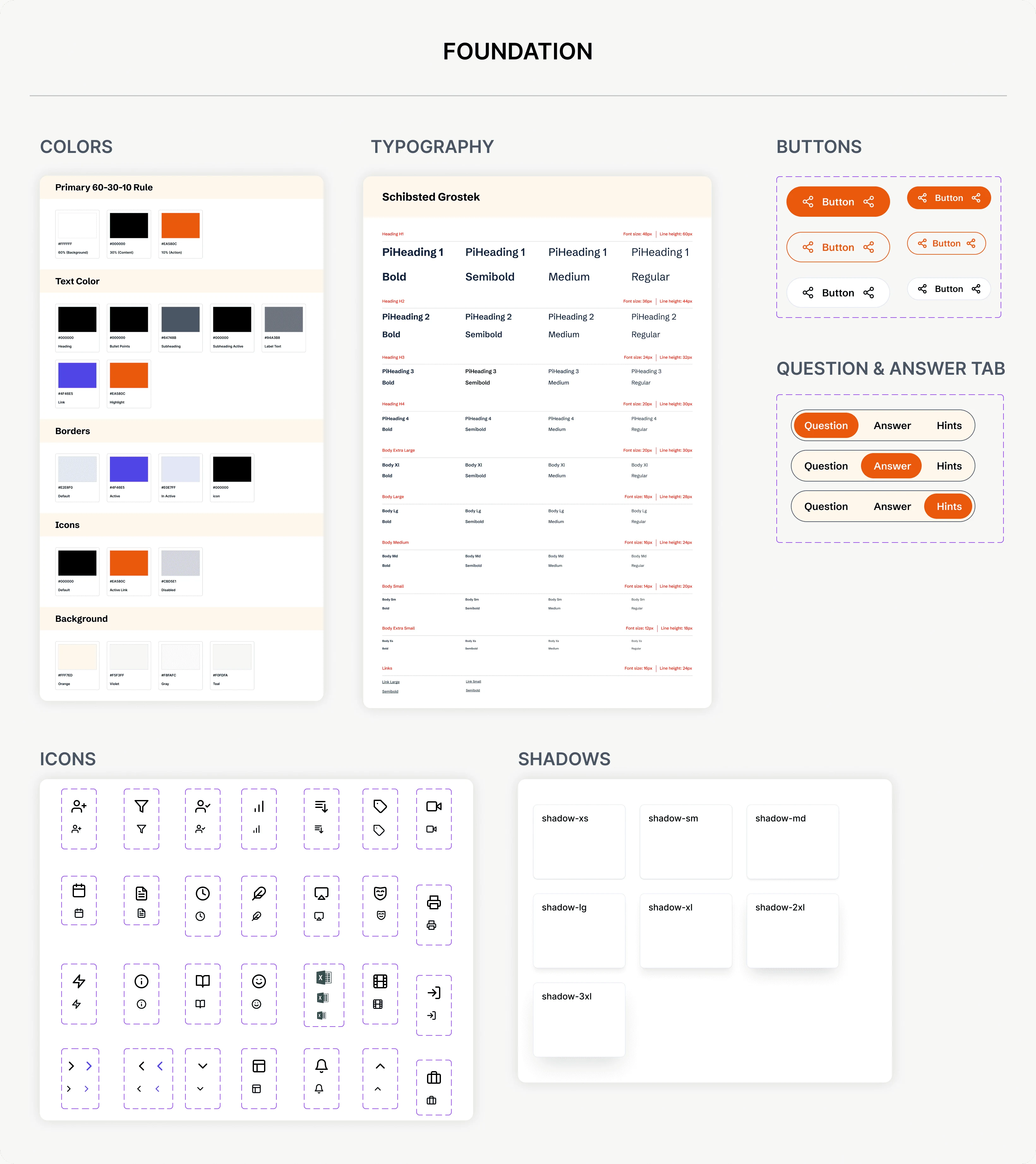
Full UI design and a reusable system replaced one-off layouts. Handoff included brand guidelines, component documentation, and extraction files.
Phase 1’s hierarchy — Product → Exam → Subject, one shared purchase journey — became the groundwork. New products extend the system instead of starting fresh.
02 — Collaboration & implementation
Wireframes shaped with the CTO and founding developer — technical fit checked early.
URLs restructured to match the new hierarchy, making the IA real, not just visual.
Handoff went beyond screens: brand guidelines, component docs, and extraction files — built for reuse.
Every decision was validated with the PM, founder, and CTO before it shipped.
Payment stayed to card and PayPal. Google sign-up wasn’t feasible in the time available — accounts were created manually instead.
03 — Phase 2 / Scaling with AI
February – May 2026. One shop became two connected products.
Students only had one way to practice — download a paper, work through it offline, mark it themselves. No record of progress, nothing showing where they were weak. Tutors had no way to manage or teach through the platform at all.
The shift: one papers-only shop became a B2C subscription for students to practice and test online, and a B2B platform for tutors to manage and teach through.
- Assign
- Practice
- AI marking
- Tutor review
- Feedback
Student flow
Online practice and mock exams, instant feedback and results, inside a subscription model.
Tutor flow
Batch management, assigning papers and mocks to students, reviewing results.
Feedback system
AI generates the mark; tutors can edit and override it before it reaches a student.
Analytics dashboard
Track student and cohort performance.
AI marks the work, but the tutor stays in control.
Design scope spanned assignment, practice, feedback and analytics. Tutor review and adjustment remain central to the feedback experience.
04 — Impact
Founder-reported
Live with 2 schools and 4 tutors, managing roughly 400 enrolled students, per the founder.
Qualitative
Developers build new screens by reusing shared components instead of starting fresh — the system carries the growth the IA set up in Phase 1.
05 — Reflection
The system made Phase 2 possible. The tutor made AI acceptable.
Trust in AI marking comes from control, not accuracy claims — every mark stays editable until a tutor releases it.
Extracting the design system before scaling was the decision that made the second product fast to build.
Next case
OpenApp
Have an idea
worth making real?
Tell us what you’re building. Let’s find the right next step.